
ISO 23351 Office Pods: What the Standard Really Covers
Why are ISO 23351 office pods getting so much attention?
When an enclosed workspace is reviewed, privacy claims are rarely enough.
That is why ISO 23351 office pods matter.
The standard helps clarify what should be measured, documented, and compared before a pod is approved for office use.
In practical terms, it supports more consistent decisions on acoustic performance, ventilation behavior, and user trust.
This is especially relevant where plug-and-play booths, focus rooms, and modular meeting spaces are specified as furniture rather than built construction.
The same discipline also carries into specialized modular enclosures used in airports, finance, and controlled medical environments.
What does ISO 23351 actually cover, and what does it not?
A common misunderstanding is that ISO 23351 office pods certify every aspect of product safety.
That is not the real scope.
More accurately, the standard defines how office pods should be assessed as enclosed, furniture-based workspaces with clear performance expectations.
It is closely tied to measurable conditions, not vague marketing language.
- Acoustic performance and how speech privacy is represented
- Ventilation effectiveness inside the enclosure
- Lighting and internal usability conditions
- Electrical integration and operational expectations
- Information needed for comparison, testing, and product claims
What it does not do is replace every local code, fire requirement, or workplace safety rule.
So, an ISO 23351 office pods review should be part of compliance work, not the whole checklist.
How should acoustic performance be interpreted in real office use?
This is where many evaluations go wrong.
People often hear “soundproof” and expect total isolation.
ISO 23351 office pods do not exist to promise silence.
They provide a framework for judging whether a pod delivers credible acoustic separation for focused work, calls, and short meetings.
In actual offices, the more useful question is this: does the pod reduce distraction and limit speech transfer enough for the intended task?
A single-user call booth may pass that test differently from a two-person meeting pod.
That is why specification should always connect acoustic data to occupancy, call duration, and surrounding noise conditions.
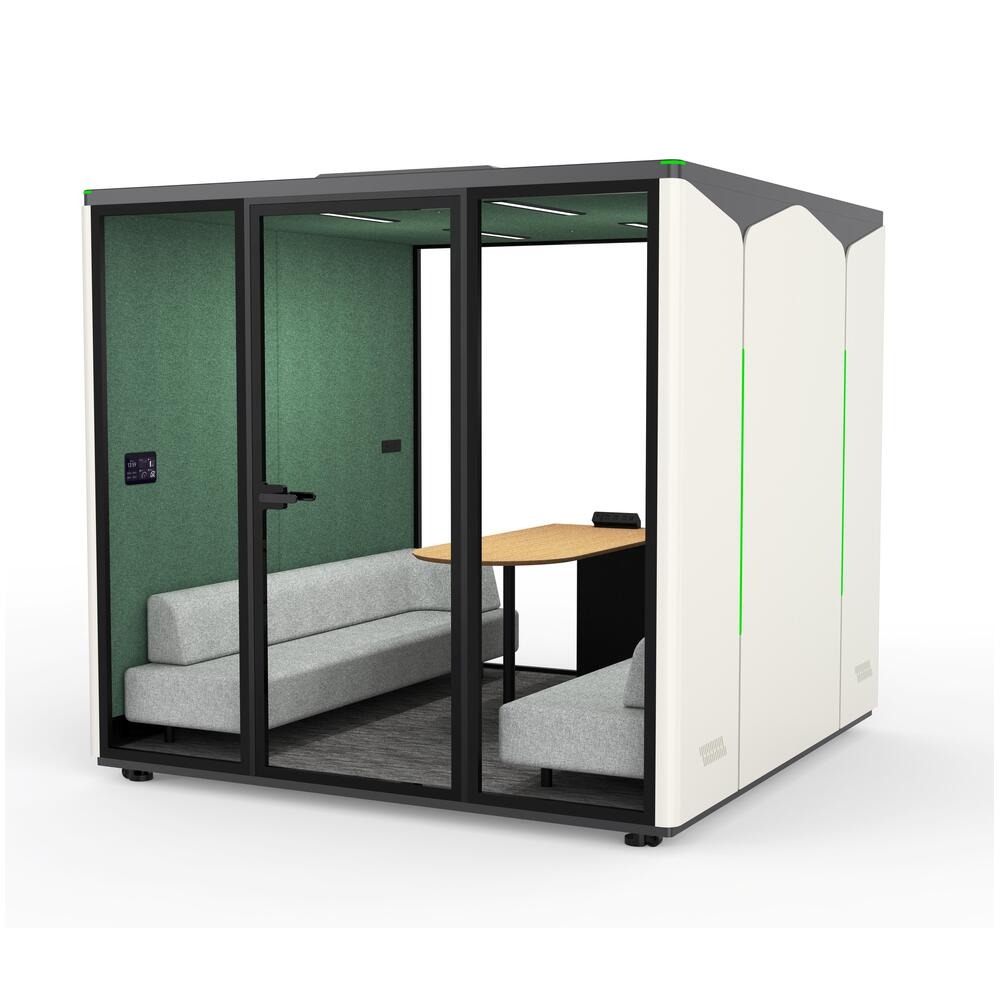
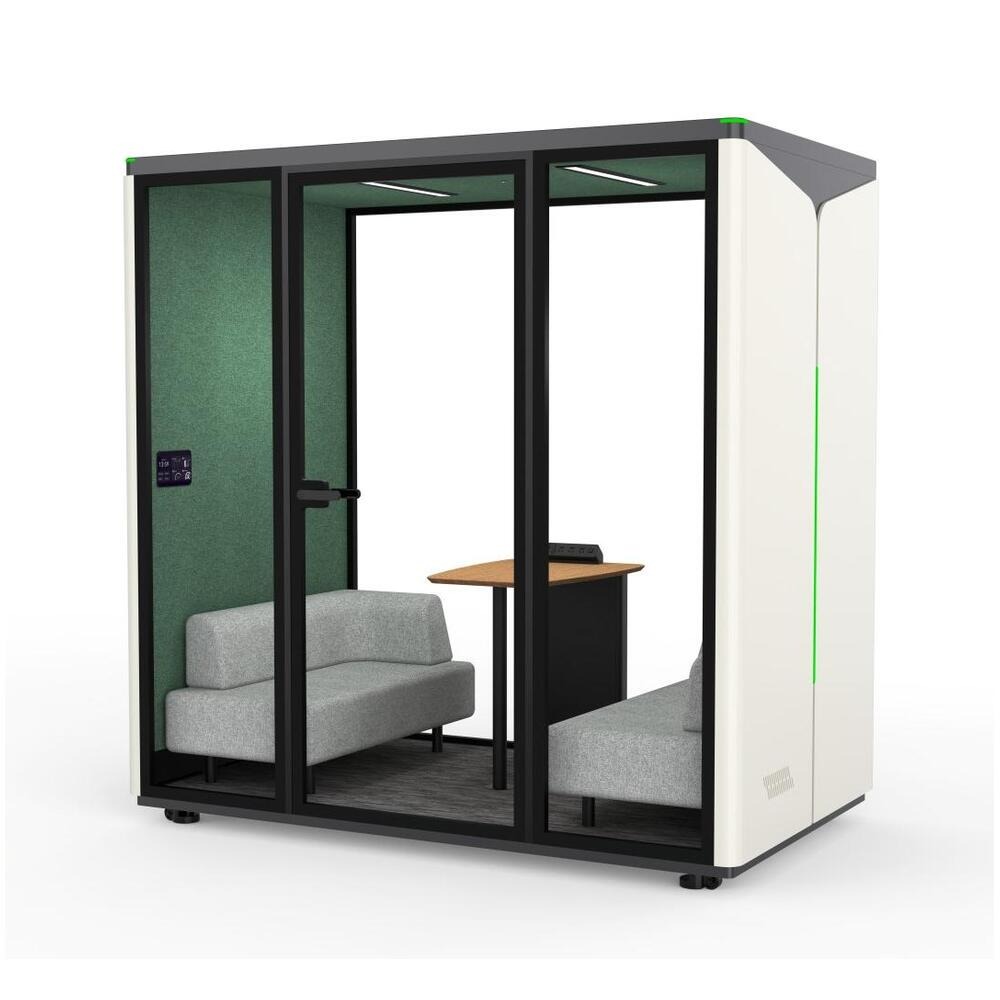
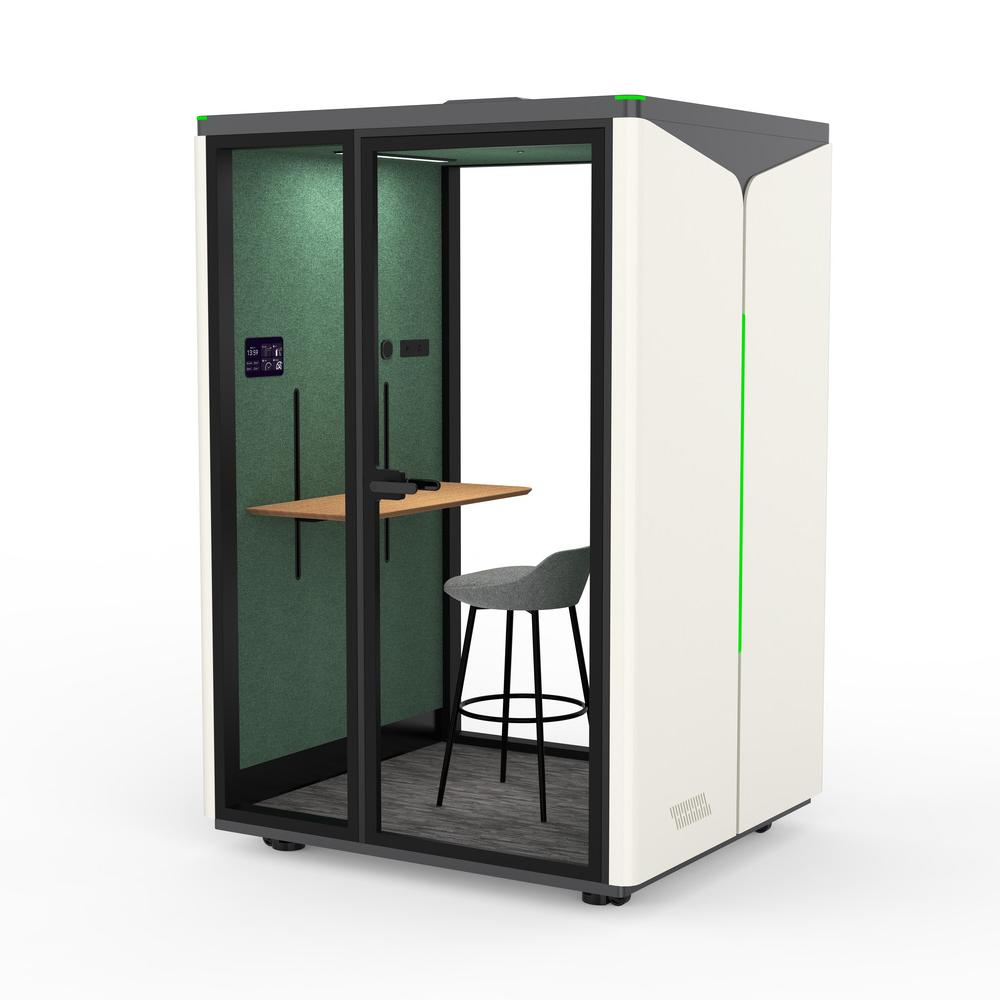
For example, a compact model such as TB-W Office Pod 1-2 Person may be appropriate when the main need is private conversation control within an open-plan floor.
The same data may be insufficient for executive discussions or sensitive banking use.
Is ventilation just a comfort issue, or part of risk control?
Ventilation is often treated as a comfort feature, but that is too narrow.
Inside enclosed furniture, air movement affects concentration, occupancy limits, and user willingness to stay inside the pod.
Poor airflow can turn a technically attractive unit into an underused asset.
When reviewing ISO 23351 office pods, it helps to check ventilation data alongside realistic usage patterns.
A booth used for ten-minute calls is one thing.
A multi-person pod used for repeated half-hour meetings is another.
This kind of review is usually more useful than asking whether a pod simply “has ventilation.”
What should be checked before approving a pod for procurement?
The safest approach is to combine standard-based data with application-based judgment.
A pod may test well and still fit poorly in a real workplace.
Before sign-off, it is worth checking five areas together.
- Declared ISO 23351 office pods performance data
- Electrical safety details and cable integration
- Emergency egress and door behavior
- Cleaning, filter access, and service intervals
- Fit with the intended office density and workflow
Need to compare options quickly?
Ask suppliers to align every claim to a test method and operating condition.
That makes side-by-side review far cleaner than comparing brochure language.
Where do teams usually misread the standard?
The first mistake is assuming ISO 23351 office pods equal universal compliance.
They do not.
The second is treating one performance number as the whole story.
Acoustics, airflow, lighting, and electrical design interact.
The third is ignoring installation context.
A pod placed near circulation routes, HVAC turbulence, or noisy collaboration zones may underperform, even when test data is sound.
In practice, stronger suppliers can usually explain where a product fits and where it does not.
That matters across a portfolio, from office booths to more controlled modular enclosures.
If a model like TB-W Office Pod 1-2 Person is under review, the better question is whether its tested performance matches the exact duty cycle and privacy level expected on site.
So what is the most practical next step?
Start with use case clarity, not with catalog language.
Define occupancy, session length, acoustic target, ventilation expectation, and site constraints.
Then map those needs against ISO 23351 office pods data, local safety requirements, and maintenance realities.
That process usually reveals whether a pod is merely attractive on paper or genuinely fit for controlled office deployment.
When the comparison is structured this way, approval decisions become easier to defend, and procurement risks are much easier to see early.

Get real-time quotes
Interested? Leave your contact details.