
Why Acoustic Pods Sometimes Sound “Boxy” & How Engineering Solves It
1. Executive Perspective: What Buyers Actually Experience
In modern hybrid workplaces, acoustic office pods are widely adopted as a fast alternative to traditional meeting rooms. They deliver measurable improvements in privacy and noise control.
However, experienced users and facility managers often report a subtle phenomenon:
Even when external noise is well isolated, speech inside the pod may sometimes feel “boxed,” “boomy,” or slightly unnatural.
From a product engineering standpoint, this is not a defect in sound insulation performance. It reflects a separate and often overlooked discipline: internal room acoustics.
Understanding this distinction is critical for procurement teams evaluating long-term workplace comfort, not just noise reduction metrics.
2. Two Independent Acoustic Systems: Isolation vs. Internal Sound Field
A professional acoustic pod operates through two fundamentally different systems:
2.1 Sound Isolation (External Control)
This refers to how effectively a structure prevents sound transmission between inside and outside.
Typical performance metrics include:
Sound reduction (dB rating)
Structural sealing
Panel density and layering
2.2 Internal Acoustics (Internal Sound Behavior)
This refers to how sound behaves once it is generated inside the enclosure.
Key factors include:
Reflection patterns
Absorption balance
Frequency response
Spatial resonance behavior
? A pod can perform well in isolation while still producing poor internal acoustic comfort if internal sound behavior is not engineered correctly.
3. Why the "Boxy Sound" Occurs in Acoustic Pods
The perception of unnatural or “boxed-in” sound is typically caused by a combination of physical acoustic effects:
3.1 High Reflectivity of Internal Surfaces
Glass panels, metal frames, and laminated boards reflect speech energy efficiently, especially in mid-frequency ranges (human voice band).
3.2 Limited Internal Volume
Compact pods shorten reflection distances, causing sound waves to return to the listener almost instantly.
This leads to:
Increased speech coloration
Perceived pressure buildup
Reduced spatial clarity
3.3 Insufficient Mid-Frequency Absorption
Human speech intelligibility is primarily concentrated between 250 Hz and 4000 Hz.
If this range is not properly controlled:
Speech becomes “hollow” or “boomy”
Vocal clarity decreases
3.4 Parallel Surface Geometry
Parallel interior surfaces can generate:
Flutter echo
Standing wave resonance
Narrow-band amplification effects
4. Engineering Principle: Internal Acoustic Comfort Is Not About "More Soft Materials"
A common misconception in entry-level product design is:
"More acoustic foam = better sound quality"
In professional acoustic engineering, this is incorrect.
High-performance pod design requires a balanced acoustic system, combining:
Absorption (energy reduction)
Reflection control (directional management)
Diffusion (sound scattering)
The objective is not to eliminate all reflections, but to ensure natural speech perception without acoustic fatigue.
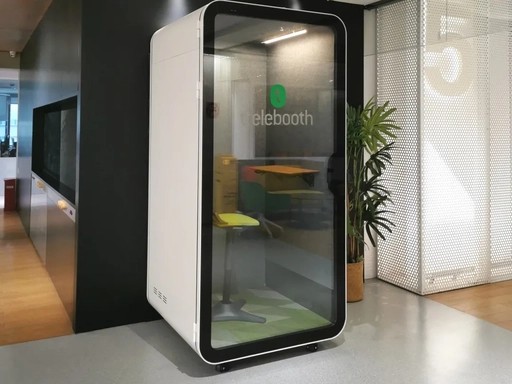
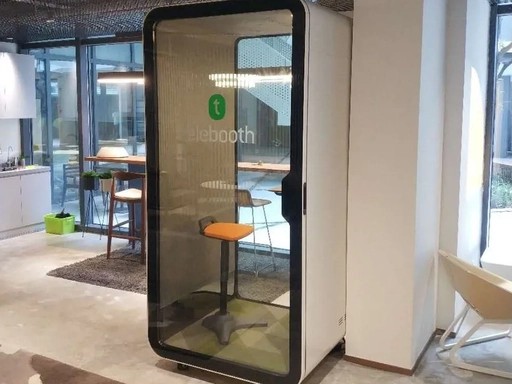
5. Design Strategies That Improve Internal Acoustic Performance
5.1 Frequency-Targeted Material Engineering
Interior materials must be optimized for speech-frequency absorption rather than decorative softness.
This ensures:
Clear voice intelligibility
Reduced resonance buildup
5.2 Non-Parallel Geometric Design
Angled surfaces and structural asymmetry reduce:
Flutter echoes
Repetitive reflection loops
Even small geometric adjustments in compact pods can significantly improve acoustic clarity.
5.3 Integrated Interior System Design
Acoustic performance is affected by all internal elements:
Desktop size and material
Seat position relative to reflective surfaces
Monitor placement and wall accessories
A well-designed pod treats interior layout as part of the acoustic system—not separate furniture placement.
5.4 Ventilation Without Acoustic Compromise
Airflow systems must be engineered to:
Maintain fresh air supply
Avoid turbulence noise
Prevent acoustic leakage paths
This is especially critical for pods used in long-duration meetings or video conferencing.
5.5 Correct Sizing Strategy
One of the most overlooked factors in procurement is internal volume selection.
A pod that is too small can:
Amplify resonance effects
Reduce speech comfort
A properly sized pod ensures balance between:
Privacy
Comfort
Acoustic neutrality
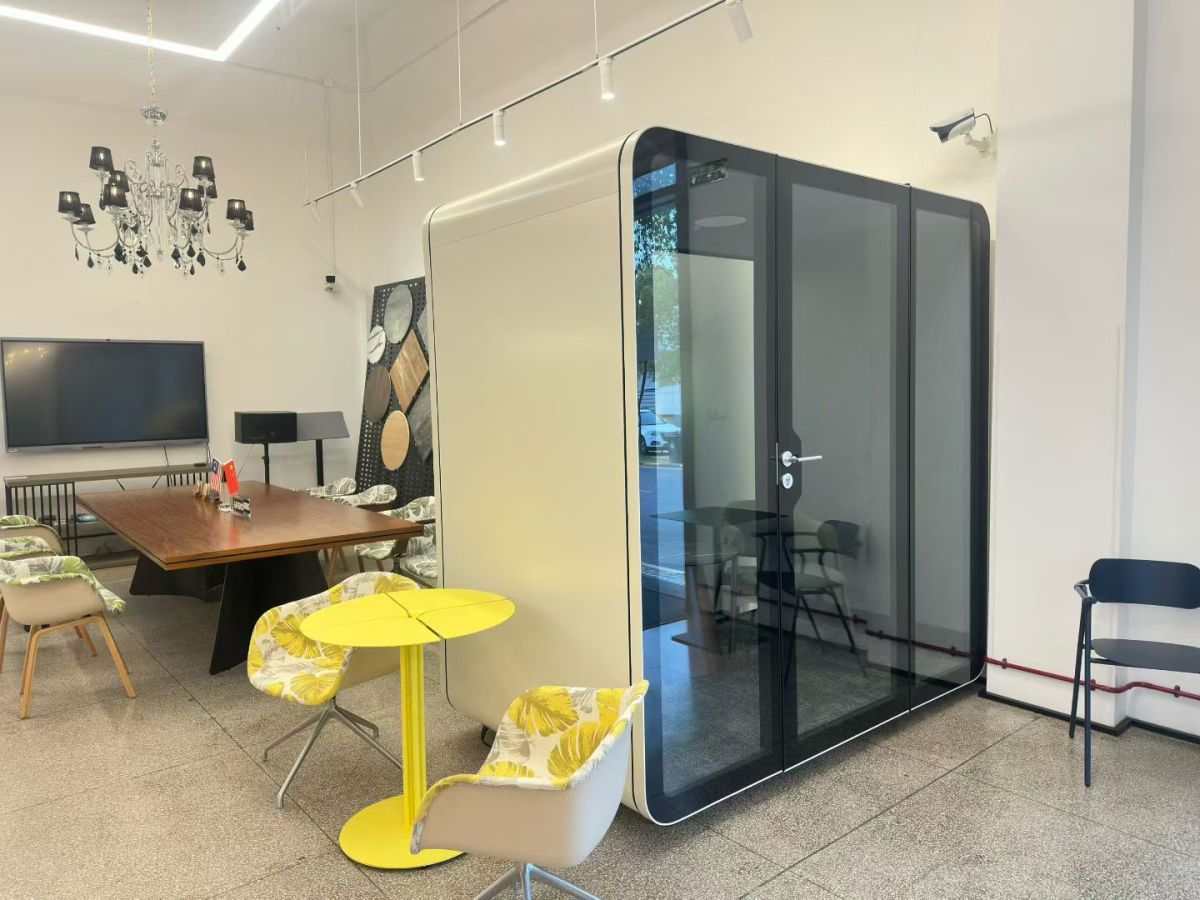
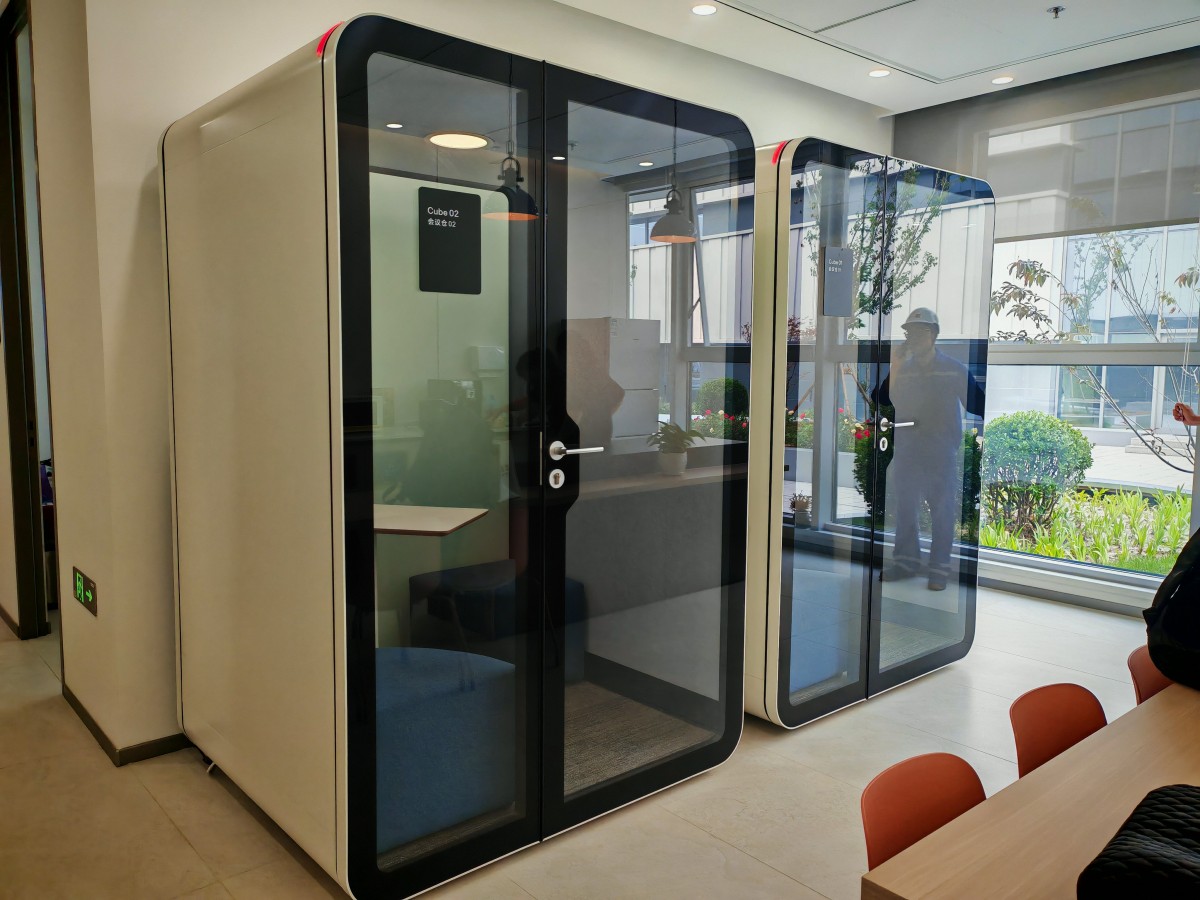
6. Market Reality: Why Most Entry-Level Pods Fail in Real Use Cases
Many low-cost products optimize only one metric:
Sound reduction performance (dB rating)
However, in real workplace environments, buyers evaluate success differently:
They expect a pod to function as:
A private communication space
A long-duration working environment
A video conferencing booth
A psychologically comfortable micro-office
This requires a multi-variable design approach, not a single-performance optimization.
7. The Telebooth Engineering Approach
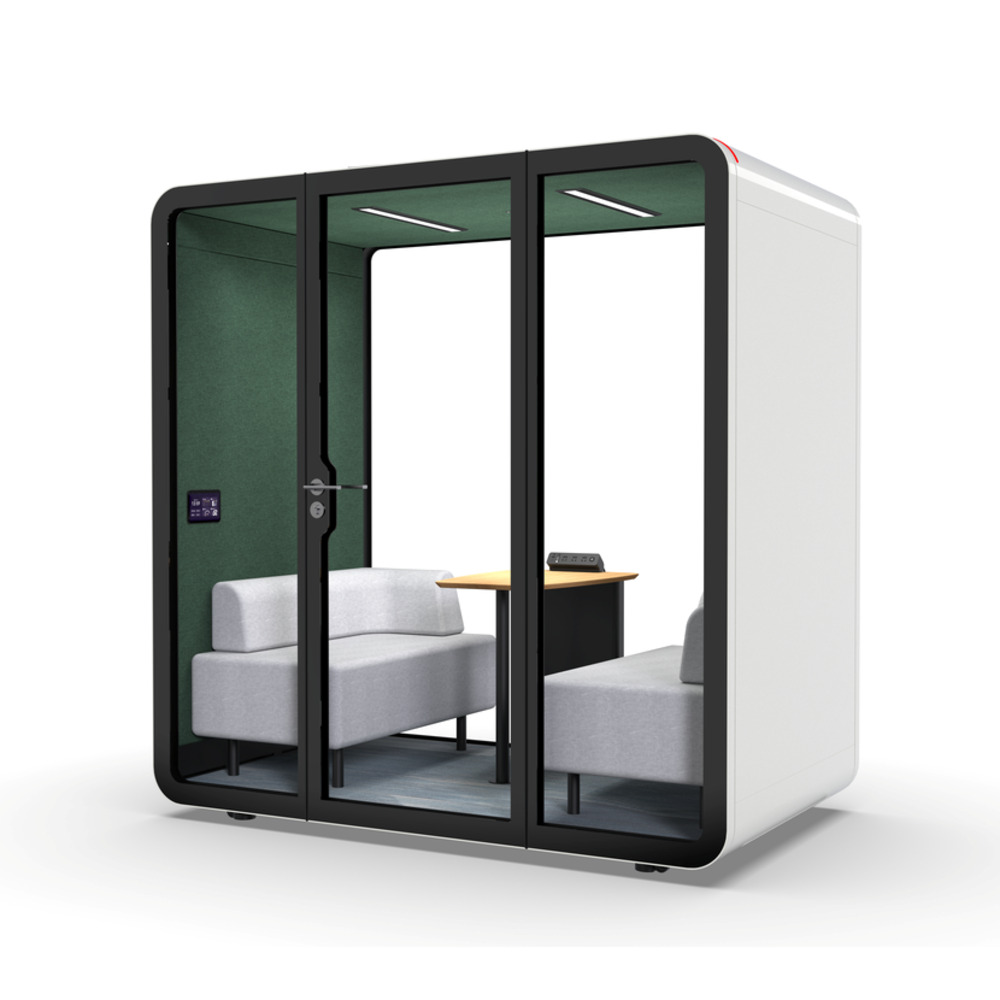
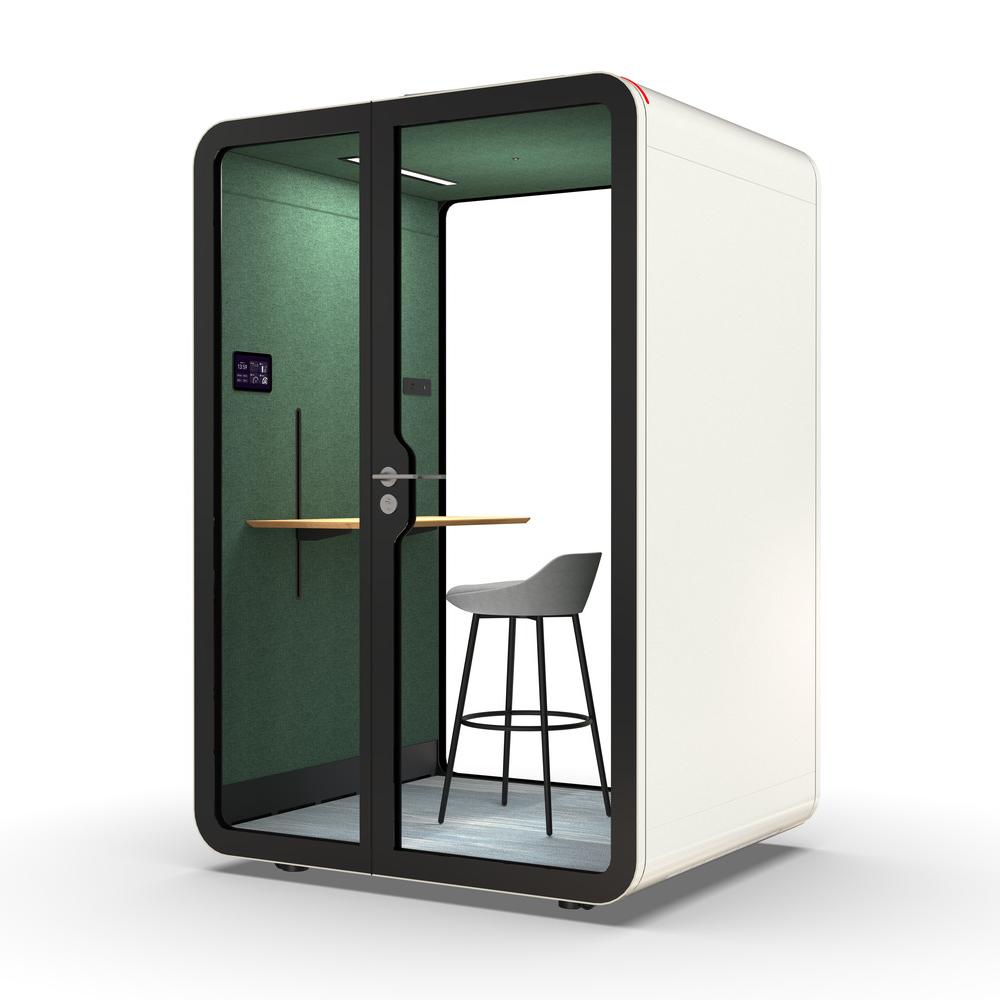
At Telebooth, acoustic pod design is treated as a system-level engineering problem, not a furniture product specification.
The design philosophy integrates:
Acoustic isolation engineering (external noise control)
Internal acoustic field optimization (speech comfort)
Airflow and thermal comfort design (long-term usability)
Ergonomic spatial configuration (human behavior alignment)
Modular structural engineering (installation and scalability)
Rather than focusing solely on "noise reduction," Telebooth focuses on:
Creating a workspace environment where speech feels natural, communication feels effortless, and extended use remains comfortable.
This approach aligns with modern workplace standards such as:
Hybrid work environments
WELL Building principles
ESG-driven office design strategies
8. Conclusion: What Defines a High-End Acoustic Pod
A truly high-performance acoustic office pod is not defined by how silent it is.
It is defined by:
How naturally people speak inside it
How long users can stay inside comfortably
How well it integrates into real workplace behavior
How consistently it performs across different usage scenarios
In this sense, internal acoustic quality is not an optional upgrade—it is the core of user experience.


Get real-time quotes
Interested? Leave your contact details.